Concrete Driveways in Lubbock
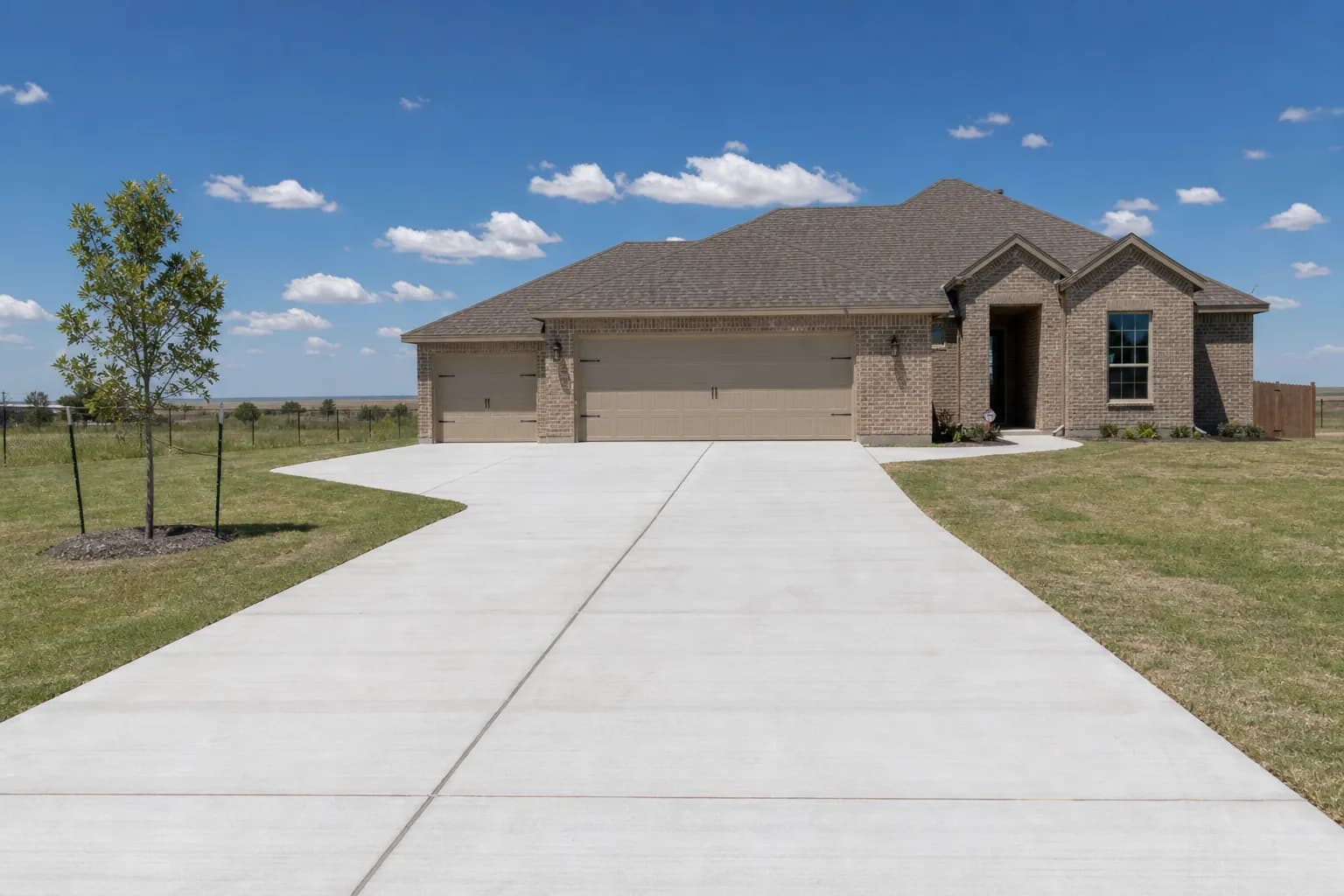
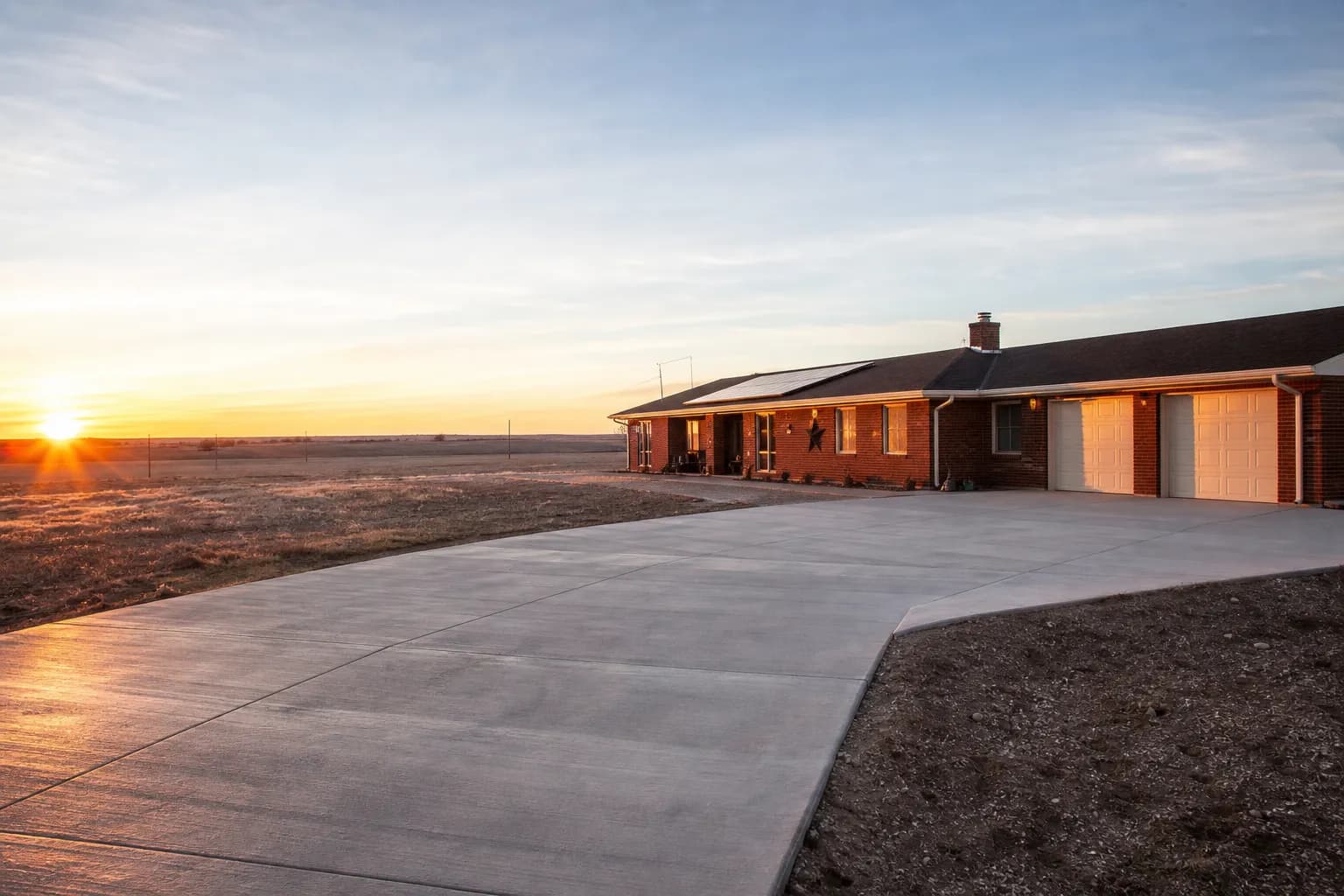
Most requests start with a driveway: a new one on a fresh lot, a wider one for a third car or a trailer, or a tear-out of a slab that has cracked into plates. The City of Lubbock's standard details call for driveways and sidewalks at least 4 inches thick, and a residential drive approach must be at least 10 feet wide where it meets the property line. Contractors often go thicker where pickups, trailers or a boat will sit.
The part of the job that decides how long it lasts happens before the truck arrives: cutting to grade, compacting the base, and laying out joints so cracks land in straight lines instead of wandering. Our concrete driveways guide covers widths, approach permits, finishes and what to ask about thickness and reinforcement.
The approach is the city's business
Pouring inside your own property lines usually needs no city permit in Lubbock. The approach, the strip between the street and your property line, is public right-of-way, and the city requires a construction permit before anyone builds, repairs or replaces a driveway or sidewalk there. City rules also limit how much of the public sidewalk can be sloped for the driveway transition (no more than 2 feet of its width) and keep at least 36 inches level where people walk across. Ask each contractor whether their price includes pulling that permit.
Slabs, Shop Pads and RV Pads
West Texas properties carry more slab than most: detached garages, metal shops, carports, barn floors, RV and trailer pads, and pads for storage buildings. The search terms people use around Lubbock say the same thing. "Cost to pour a concrete pad" and "price to pour a concrete slab" are among the most-searched concrete phrases here, ahead of most service names.
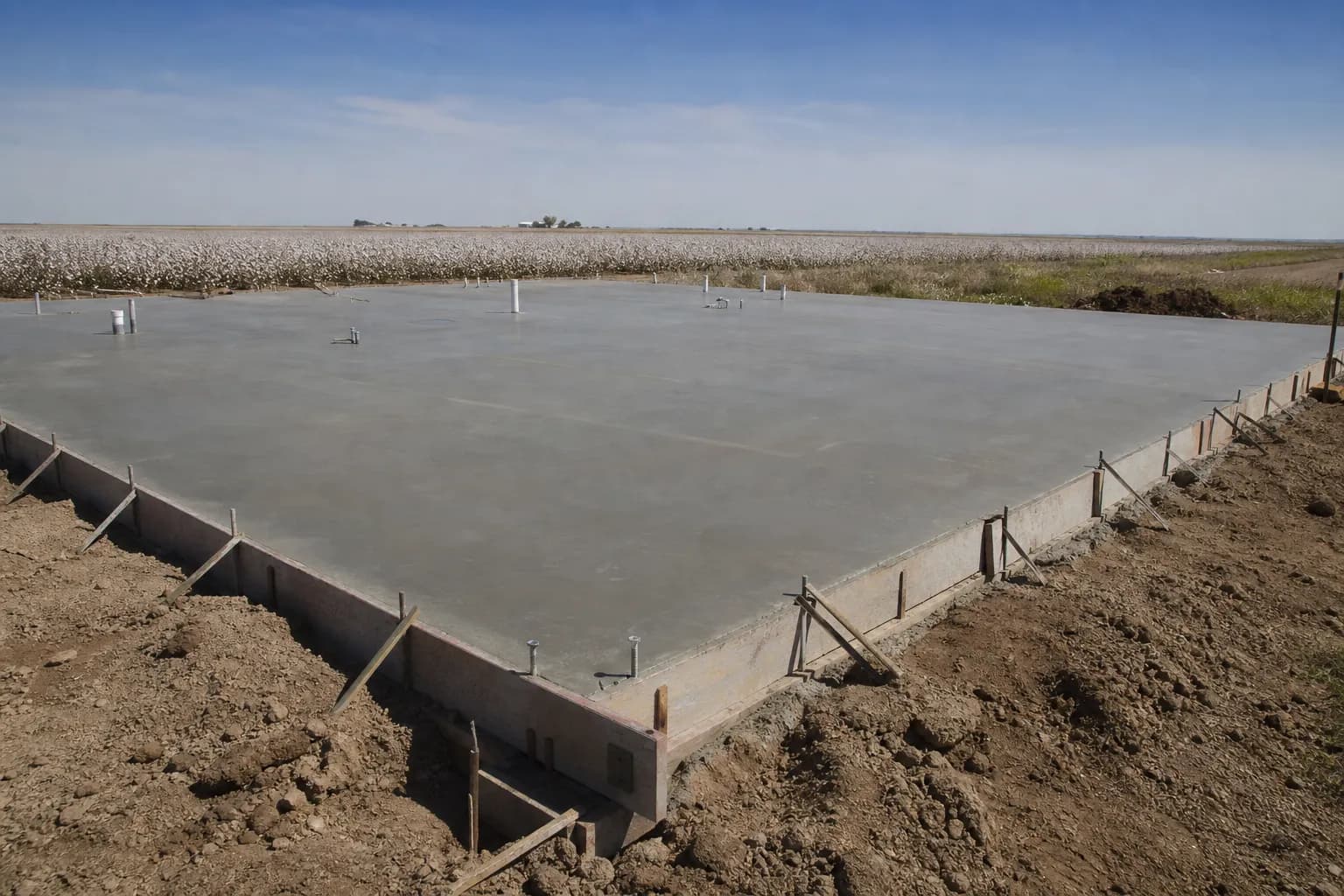
A slab for a building is a different job from a patio. Thickened edges or grade beams under the walls, anchor bolts set in the right spots for the steel frame, plumbing stubbed up before the pour and a vapor barrier under living space all have to be planned. See concrete slabs and shop pads for sizes, thickness and the questions that separate a careful bid from a quick one.
Size it once
A 40 by 60 foot shop floor is 2,400 square feet. At 4 inches thick, one cubic yard of concrete covers about 81 square feet, so that floor alone needs roughly 30 yards before thickened edges and waste. It is cheaper to pour the apron, the RV pad or the extra bay in the same mobilization than to bring a crew and a pump back later.
Patios and Backyard Concrete
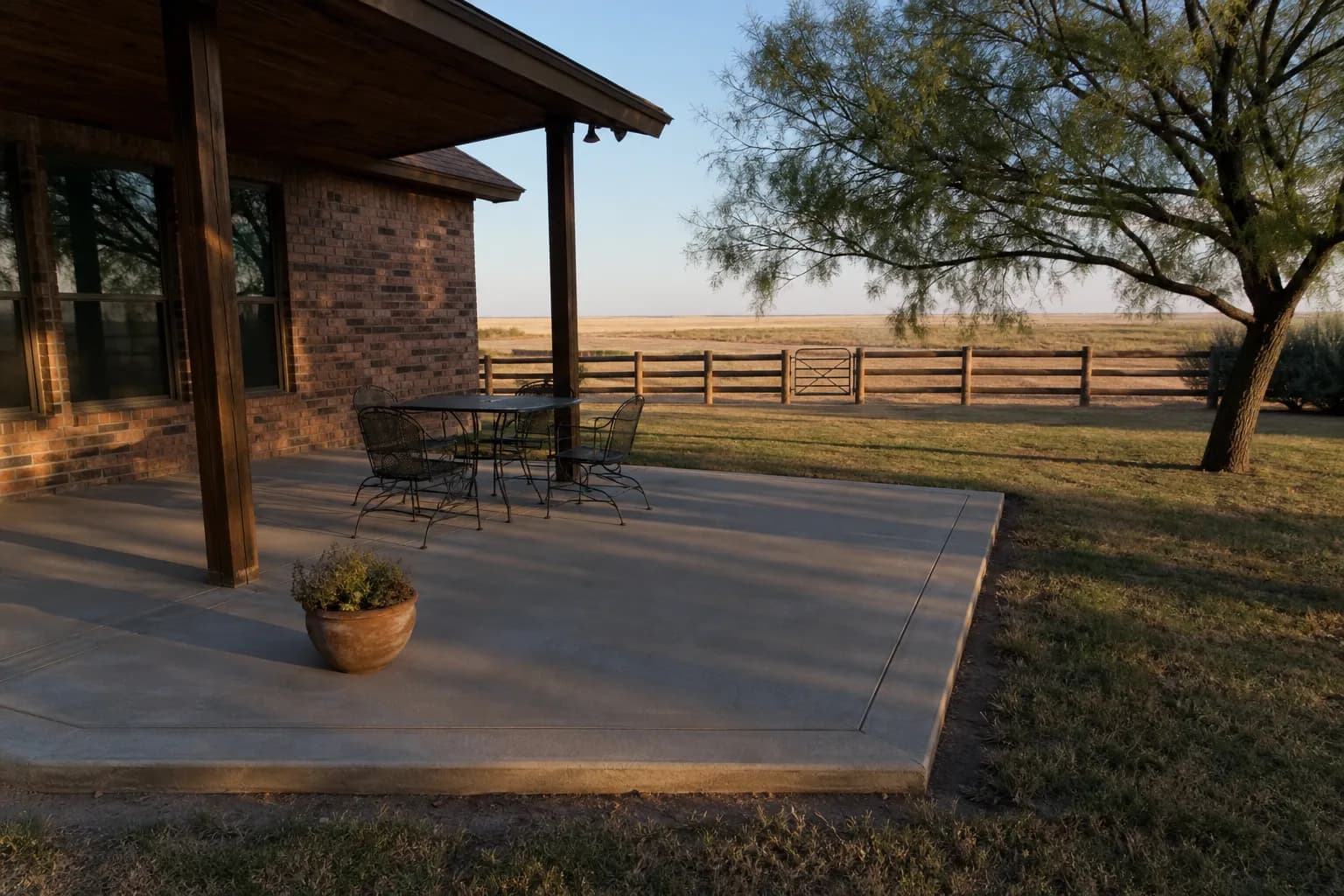
Backyard concrete in Lubbock has two jobs: give you somewhere to sit out of the wind, and move water away from the house during the May and June storm season. A concrete patio should be sloped away from the foundation, and its edges should not trap runoff against brick or siding. Covered patios, outdoor kitchens and fire-pit pads are common add-ons; each changes the slab design, so mention them early.
Finish is a matter of taste and budget. Broom finish is plain and grippy. Stamped patterns imitate slate, flagstone or wood plank. Textured and stained surfaces sit in between. National guides put plain patios at about $5 to $8 per square foot installed, with custom finishes running well past that.
What Concrete Work Costs Around Lubbock
We could not find any published Lubbock-specific price data, so the table below shows typical national installed ranges from cost guides. Local contractors set their own prices, and only a written quote on your site is a real number.
| Job | Typical national range |
|---|---|
| Plain broom-finish driveway | $6–$12 per sq ft |
| Concrete slab or pad | $4–$8 per sq ft (reinforced above $10) |
| Patio, plain | $5–$8 per sq ft |
| Stamped concrete | $12–$25 per sq ft |
| Sidewalk or walkway | $6–$14 per sq ft |
| Tear-out of old concrete | $2–$6 per sq ft |
| Slab leveling (mudjacking) | $3–$8 per sq ft |
What moves a Lubbock quote: total square footage (bigger pours spread the fixed cost of crew and trucks), thickness and steel, how much caliche has to be cut, whether old concrete is coming out, finish, pump access to a backyard, and any right-of-way permit for the approach.
Caliche, Clay and the Ground Under the Slab
The ground around Lubbock is mostly deep, nearly level loam: the Amarillo and Acuff soils that also grow the county's cotton. Below the topsoil many of these profiles carry a calcium-carbonate layer, the caliche that every local contractor knows. In the Amarillo series the USDA puts that calcic horizon at about 30 to 60 inches down, and soil studies of Lubbock County describe caliche ranging from a few inches to about 10 feet thick.
Two things follow for concrete. Caliche can make digging footings and grade beams slow work, and water that cannot soak through it tends to spread sideways and collect at the edge of a slab. Near playas and draws the soils run heavier in clay. The Olton series, for example, holds 35 to 50 percent clay, and related playa soils swell and shrink even more as they wet and dry. Ask any contractor what they expect under your slab and how they will compact and drain the base.
Wind, Heat and Freezes
Lubbock's July normal high is 93.4°F, the hottest day of a typical year reaches about 102°F, and the city averages about 13 days a year at 100°F or more. It is also the 10th-windiest city in the country, with an average wind speed of 12.4 mph. Hot, dry wind pulls water out of fresh concrete faster than it can cure, which is how surfaces craze and how plastic shrinkage cracks open in the first hours.
Winter brings the opposite problem. January lows average 27.2°F and freezes run from roughly October to April, so fresh slabs may need blankets, and the city's design criteria set the frost line at 14 inches for footings. Good contractors schedule around both: early starts and wind breaks in summer, covered curing in winter, and no pours ahead of a hard freeze. Ask what their plan is for the week you are booked.