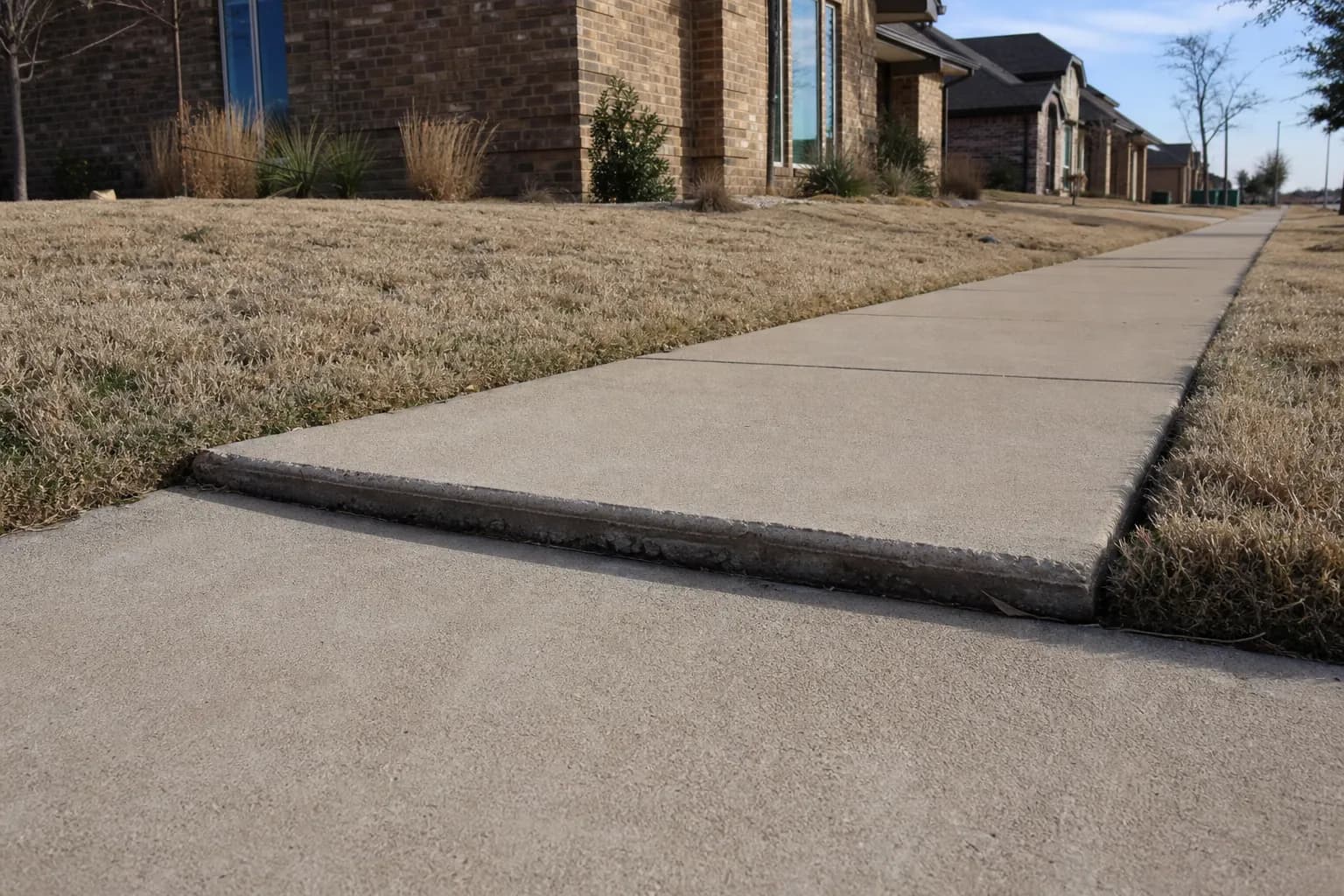
Mudjacking versus foam
| Mudjacking (slabjacking) | Polyurethane foam | |
|---|---|---|
| Material | Cement-based slurry | Expanding foam |
| Holes drilled | Larger | Smaller |
| Weight added | Heavy | Light |
| Cost | Lower | Higher |
National cost guides put slab leveling at about $3 to $8 per square foot, with foam usually at the higher end. Both work best on slabs that are intact and sank because the soil underneath settled or washed out.
Good candidates
- A sidewalk panel that dropped and left a trip edge.
- A garage-front driveway slab that settled where downspout water ran under it.
- Patio panels tilted back toward the house.
- Steps or a stoop that settled as a unit.
Poor candidates are slabs broken into many pieces, slabs that heave upward (lifting will not fix swelling clay), and anything with a void caused by an active leak that has not been fixed.
Why slabs sink here
Water is the usual cause. Lubbock gets most of its 18.33 inches of yearly rain in a few heavy months, and water from roofs, sprinklers or a low spot can soften or wash out fill under the edge of a slab. Caliche below can hold water near the surface, and clay soils near playas shrink as they dry in summer. Fixing gutters, downspouts and grading at the same time keeps a lifted slab from sinking again.
After lifting
The drill holes are patched, and joints and cracks are sealed so water stays out. Lifted panels will not look new; if the surface is also worn, ask about resurfacing. If the panel is part of the public sidewalk in Lubbock, ask the contractor whether work in the right-of-way needs a city permit.
Back to the main guide: concrete contractors in Lubbock, TX.